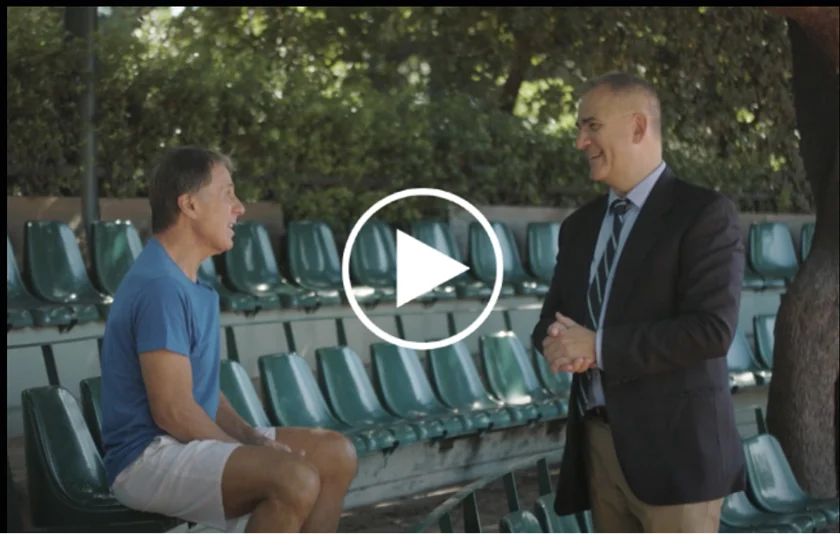
What is a Shoulder Arthroscopy?
Today, arthroscopy is considered the leading method for treating conditions affecting the shoulder. The majority of shoulder problems, with very few exceptions, can now be managed arthroscopically, offering maximum safety and high success rates. Among procedures that share the suffix “-scopy” are gastroscopy, hysteroscopy, and laryngoscopy.
Shoulder arthroscopy, like all examinations or procedures that include the suffix “-scopy,” is performed using a specialized camera. This camera allows the specialist to visualize even the smallest lesions with precision, as they are magnified and displayed on a screen. Arthroscopy—meaning the inspection of a joint and the correction of its pathological conditions—was first introduced in the 1980s. Today, it has more than 40 years of clinical application, during which both technology and medical expertise have significantly evolved, addressing a wide range of needs for the modern patient.
The shoulder is a complex joint, offering a greater range of motion than most other joints in the human body. This characteristic makes it particularly vulnerable and prone to injuries. The shoulder joint was the second joint, after the knee, to be successfully treated using arthroscopy. This technique now covers such a broad spectrum of requirements and conditions that almost all disorders affecting the shoulder joint can be treated through its application. Symptoms such as stiffness, pain, and reduced strength are reasons why a patient should seek evaluation by an orthopedic specialist.
How is Arthroscopy Performed?
Shoulder arthroscopy is performed in a hospital setting, as with all arthroscopic procedures, and the patient is discharged on the same day. Shoulder arthroscopy is carried out through 2 or 3 small incisions of approximately 0.5 centimeters each, while the duration of the procedure typically ranges from 30 to 90 minutes on average. As it is a minimally invasive technique, the recovery time is significantly reduced, allowing the patient to return to daily activities more quickly. Patients who undergo more complex procedures may need to use a supportive device (brace or sling) for a certain period of time.
Orthopedic Surgeon Dr. Dretakis
Orthopedic Surgeon Dr. Dretakis has extensive experience and uses modern techniques. He maintains a practice in Athens, Maroussi and Glyfada.
Athens | Marousi | Glyfada
Which Activities Place the Greatest Strain on the Shoulder?
The growing participation of people of all ages in sports activities in recent years has led to a significant increase in injury rates. In particular, sports that involve high intensity and wide-range overhead movements—such as tennis, handball, swimming, water polo, volleyball, javelin throwing, and squash—are considered potentially harmful to the shoulder. In general, all sports that cause intense shoulder strain can lead to significant injuries. For this reason, proper warm-up and strengthening exercises are key components in an athlete’s routine. Additionally, activities such as moving furniture or gardening should be performed with particular caution by individuals of all ages.
A few years ago, when a patient over the age of 50 visited a physician complaining of shoulder discomfort—especially if it resulted from participation in sports—the orthopedic approach would have been different. The most likely recommendation after completing treatment would have been to discontinue all athletic activities. Today, thanks to advances in modern medicine and technological progress, this recommendation is no longer given by orthopedic specialists. Contemporary orthopedics recognizes the importance of movement in a balanced life and defines it as an integral part of a healthy routine.
The shoulder joint is supported by a complex group of muscles and tendons that function together to enable a wide range of motion. These tendons and muscles cover the head of the humerus, connecting it to the scapula. This system allows a person to lift their arms and perform rotational movements. This complex is known as the rotator cuff. Among all the tendons of the rotator cuff, the supraspinatus tendon is the one that, in 95% of cases, first undergoes degeneration and subsequently rupture. Today, with the help of arthroscopy and the specialized expertise of an experienced surgeon and their team, repair of this damage is fully achievable.
With the assistance of arthroscopy, shoulder restoration is now performed more easily and safely than ever before. The procedure is achieved through decompression of the subacromial space and repair (suturing) of the supraspinatus tendon. As this is a minimally invasive method, it optimizes outcomes while minimizing complications and postoperative pain. This is mainly because the supraspinatus tendon passes through a very narrow anatomical space, to which access was much more limited with older surgical techniques. This area is called the subacromial space. Since the subacromial space is naturally narrow due to human anatomy, access becomes particularly difficult when the patient has sustained significant injuries. From the moment of trauma, the supraspinatus tendon may begin to deteriorate gradually. This degeneration progresses slowly over time, eventually leading to rupture.
With the help of arthroscopy, we can restore more than 90% of serious shoulder problems and injuries. As a result, we are now able to prevent severe complications, such as large tendon tears and permanent damage to the shoulder joint.
Injuries and Pathological Conditions Fully Treated with Shoulder Arthroscopy
- Impingement supraspinatus syndrome
- Removal of painful calcifications (subacromial calcific deposits)
- Supraspinatus tendon tear
- Biceps tendon tear
- Subscapularis tendon tear
- Combined rotator cuff tears
- Removal of isolated osteophytes
- Targeted injections of biologic agents
What is the Cost of Arthroscopy?
In general terms, the cost of both the diagnostic evaluation and the surgical procedure is considered affordable. Particularly important is the coverage of surgical expenses by the patient’s public insurance fund or, in the case of private health insurance, the amount covered under the individual policy. Contact us to design a treatment plan tailored to your specific needs and to receive detailed information regarding the total cost of the procedure.
Dr. K. Dretakis and his experienced scientific team possess specialized knowledge and extensive experience in shoulder arthroscopy. Indicatively, they perform more than 120 arthroscopic procedures each year, covering a wide spectrum of cases. Beyond individuals who participate in sports recreationally, they have also managed conditions affecting high-level athletes, including those competing in national teams and meeting demanding training requirements. The mission of the modern orthopedic surgeon is not only to help the patient walk, move properly, and perform effectively at work, but also to enable a safe and prompt return to athletic activities.
Individuals who structure their lives without regular physical activity will inevitably face significant weight gain, mental health disturbances, and an increased risk of developing autoimmune diseases. Maintaining a healthy lifestyle over time plays a pivotal role in overall quality of life, as it allows a person to remain strong and self-sufficient. Shoulder arthroscopy has helped hundreds of our patients fully restore their active, athletic lifestyle—perhaps the greatest testament to the effectiveness of this method.
Reclaim your freedom today!
We never rely on luck, but on our knowledge and experience.
make an appointmentINFORMATIONAL VIDEOS & PATIENT CASES
Visit our YouTube channel to see scientific videos and patient case studies