
Robotic Surgery
Dr. Konstantinos Dretakis is a pioneer in Robotic Orthopaedic Surgery, becoming the first Greek surgeon certified in the field in 2011. Dr Dretakis started Robotics in Greece in January of 2014
What Is Robotic Surgery?
Robotic surgery has opened impressive new horizons in the treatment of serious medical conditions and represents a revolution in 21st-century surgical practice. It contributes significantly to the precision with which procedures can now be performed, while also reducing surgical errors that in the past could lead to major complications. The movements performed by robotic surgical arms provide the highest possible level of accuracy, making them invaluable tools for surgeons performing complex procedures — whether in the most hard-to-reach areas of the human body or in highly sensitive regions such as major joints. Naturally, robotic surgery does not replace the surgeon. Only under the guidance of an experienced physician can it achieve optimal results, with robotic arms serving as a powerful instrument alongside medical expertise.
Who Performs Robotic Surgery?
Robotic surgery is performed by specialized and certified physicians and is applied across a wide range of procedures in several surgical specialties, including urology, gynecology, general surgery, and orthopaedics. This field continues to expand rapidly, encompassing an increasing number of medical specialties and surgical applications.
Leading Robotic Orthopaedic Surgery in Greece
Greece has become one of the European countries utilizing robotic technology in the field of orthopaedics. With the assistance of this highly advanced technology, Dr. K. Dretakis performs knee and hip surgical procedures with exceptional precision, achieving accuracy levels of up to one-hundredth of a millimeter. Dr Dretakis is a major researcher in Robotics and his research is published in the most prestigious scientific journals.
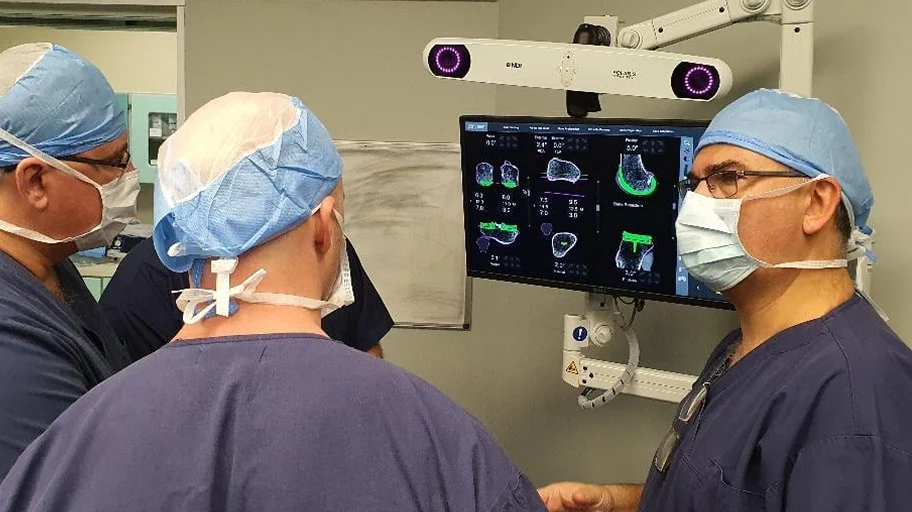
MAKO Robotic Orthopaedic Surgery
The MAKO robotic system is unique in its field and stands at the forefront of global technological innovation. With the assistance of the MAKO robot, damage to the knee joint can be treated at an early stage, often well before a total joint replacement — also known as arthroplasty — becomes necessary. In affected areas of the knee, partial replacement of the meniscus and femoral condyles can be performed with high precision. Regarding the hip, joints affected by arthritis or other degenerative conditions can undergo minimally invasive robotic replacement using specialized MAKO implants, which are exclusively designed for robotic-assisted procedures.
Advantages of MAKO Robotic Surgery
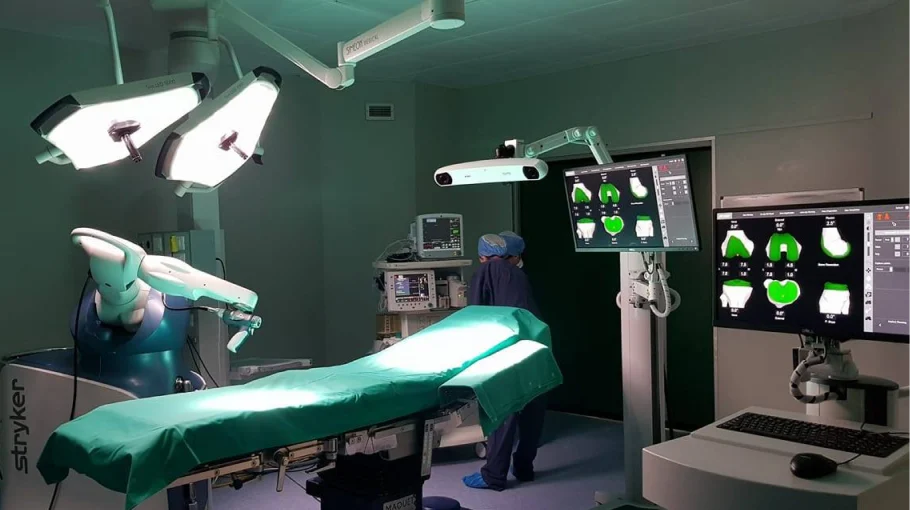
Procedures performed with the MAKO robotic system, developed by Stryker, require smaller incisions, allowing patients to remain in the hospital for a significantly shorter period of time. In most cases, discharge is possible within just one day following robotic surgery. The duration of the procedure typically ranges from 30 to 60 minutes, which greatly contributes to reducing potential complications. Blood loss is minimal, and postoperative complications associated with blood loss are significantly reduced. Patients undergoing robotic knee and hip surgery regain mobility more quickly and experience a considerably shorter recovery time. The results of robotic orthopaedic surgery in the United States have been so significant that hospitals utilizing the MAKO system — despite their increasing number — rapidly develop long waiting lists of patients who prefer this advanced approach over traditional surgical methods.
Orthopedic Surgeon Dr. Dretakis
Orthopedic Surgeon Dr. Dretakis has extensive experience and uses modern techniques. He maintains a practice in Athens, Maroussi and Glyfada.
Athens | Marousi | Glyfada
When is Robotic Surgery used in orthopaedics?
In orthopaedics, robotic surgery is primarily applied in conditions such as knee and hip osteoarthritis, post-traumatic arthritis, rheumatoid arthritis, and avascular (aseptic) necrosis of a joint, when surgical treatment with joint replacement (arthroplasty) is required. The MAKO robotic system, manufactured in the United States by Stryker, is the first and only robotic-assisted system specifically designed for orthopaedic applications. The level of precision achieved with this robotic system in knee and hip procedures cannot be matched by conventional surgical techniques.
Applications in Orthopaedics
In these procedures, a highly detailed, high-resolution CT scan is performed, along with three-dimensional mapping of joint movement before surgery. Ligament stability is recorded and assessed, while intraoperative results are automatically compared using specialized software and artificial intelligence. Through this process, the possibility of human error is virtually eliminated. Absolute respect for each patient’s unique anatomy is maintained, allowing the new joint to be precisely customized according to individual anatomical requirements. In robotic knee and hip procedures, precision in bone preparation and implant positioning is of paramount importance. This level of accuracy enables the achievement of exceptional surgical outcomes that closely replicate the natural biomechanics of the human knee or hip, creating near-frictionless conditions that significantly enhance the long-term durability of the implants. Thanks to this advanced method, we can now ensure a fully functional joint with optimal ligament stability, enabling patients to regain both strength and balance.
What are the advantages of Robotic Surgery?
Patients who benefit from robotic technology are able to stand and bear full weight within just a few hours after surgery. They have demonstrably reduced need for pain medication and prolonged bed rest. In many cases, patients do not need to remain bedridden at all — a particularly important advantage of robotic surgery.
Indicatively, the key benefits of robotic surgery include:
- Fully personalized, high-resolution preoperative planning
- Highly precise implant positioning with fully measurable and reproducible results
- The ability to treat osteoarthritis at an early stage, performing partial joint replacement (in the case of the knee) rather than total replacement
- Smaller surgical incisions, minimal blood loss, and reduced soft-tissue trauma
- Lower complication rates and reduced need for revision surgery, which was more common with older surgical techniques
- Faster mobilization and recovery
How does Robotic Knee and Hip Surgery differ?
The applications of robotic orthopaedics include partial knee replacement, total knee arthroplasty, and hip arthroplasty.
In cases involving localized wear of the knee joint — often following meniscal, cruciate ligament, or cartilage injuries — the contribution of the MAKO robotic system is truly transformative. The main indication is early-stage osteoarthritis or post-traumatic arthritis. These procedures are particularly suitable for younger patients with significant athletic activity who seek relief from persistent pain. In such cases, only the damaged portion of the joint is replaced, while the healthy structures are preserved intact. These procedures are associated with virtually no blood loss, smaller incisions, and typically require only a one-day hospital stay. Recovery is remarkably faster. This type of surgery is also appropriate for older or medically fragile patients who may not tolerate more extensive surgical procedures.
Early intervention with partial knee replacement is crucial in preventing the progression of osteoarthritis. Prompt diagnosis and treatment help avoid reduced mobility and muscle weakness, which often accompany neglected osteoarthritis and may lead to severe long-term consequences.
In robotic-assisted total knee arthroplasty, although the procedure may resemble conventional knee replacement in its basic principles, it is in fact fundamentally different in both planning and execution. The robotic system enables highly detailed preoperative planning and exceptional intraoperative precision, resulting in optimal implant positioning and improved functional outcomes.
Robotic Surgery & Reduction of Surgical Error
The recording of joint motion data prior to surgery — through the powerful MAKO planning software — ensures a highly detailed surgical plan based on each patient’s unique anatomy. The surgeon has the ability to modify the plan intraoperatively if deemed necessary. At the same time, the system’s built-in safety mechanisms, with robotic arms designed to prevent deviations by automatically stopping when any discrepancy is detected, significantly enhance procedural security. In addition, intraoperative assessment of ligament stability and joint mobility collectively contribute to the optimal placement of the new knee joint. The surgical outcome is consistently precise, predictable, and fully measurable, allowing the surgeon to perform accurate evaluations and comparisons.
In hip conditions such as osteoarthritis, rheumatoid arthritis, avascular necrosis, or post-traumatic arthritis, robotic hip arthroplasty is considered the most appropriate method. The system provides the surgeon with real-time information regarding leg length and hip rotation, while allowing intraoperative adjustments to ensure absolute ligament stability and properly balanced lower limbs.
Robotic orthopaedic surgery represents the most advanced medical technology currently available for the treatment of arthritis and severe knee and hip disorders.
The use of the MAKO orthopaedic robotic system offers unmatched precision and excellent outcomes in joint replacement procedures (arthroplasties).
The MAKO system accurately plans the exact area where the new joint will be shaped, calculates alignment angles and axes of motion before surgery begins, and executes the procedure with precision down to one-tenth of a millimeter.
Orthopedic Surgeon Dr. Dretakis
Orthopedic Surgeon Dr. Dretakis has extensive experience and uses modern techniques. He maintains a practice in Athens, Maroussi and Glyfada.
Athens | Marousi | Glyfada
What is osteoarthritis?
Osteoarthritis is the most common form of arthritis—meaning inflammation of the joints—and constitutes the most frequent cause of disability worldwide. Today in Greece, more than 500,000 people suffer from osteoarthritis of the hip and knee, a number that has increased significantly in recent years. Sufferers experience severe pain and limited mobility, inevitably leading to a serious deterioration in their quality of life. Over time, several patients may develop symptoms of depression as a result of the limitations they experience in their daily lives. Movement is essential, both for a person’s well-being and overall health.
What are the main causes of osteoarthritis?
- Injuries of the knee, menisci, cruciate ligaments
- Repetitive extreme strain
- Changes in the loading axis, valgus, varus
- Obesity
- Heredity
What are the symptoms of osteoarthritis?
- Pain during prolonged standing, walking, or on stairs
- Pain at the start of walking, during the first few steps, which then goes away
- Joint stiffness
- Joint swelling (knee)
- Crepitus, a sensation of a bothersome sound accompanied by pain
What is the appropriate treatment?
Until now, total knee arthroplasty was the only method of treatment. This is a surgical procedure that involves replacing the entire joint. Although this surgery is often successful, it can present complications and requires a long recovery time.
Today, robotic arthroplasty can help us replace only the part affected by arthritis, keeping the rest of the joint intact. The larger the portion of the healthy joint we preserve, the more postoperative time and pain are reduced.
Who Is a Candidate for Robotic Orthopaedic Surgery?
- Individuals experiencing the early symptoms of osteoarthritis
- Patients with persistent pain in the medial (inner) compartment of the knee lasting for months
- Individuals who experience significant start-up pain at the beginning of physical activity
- Patients who have previously undergone meniscus surgery and continue to suffer from limiting knee pain
- Individuals who have not responded to conservative treatment for osteoarthritis, including medication
Reclaim your freedom today!
We never rely on luck, but on our knowledge and experience.
make an appointmentINFORMATIONAL VIDEOS & PATIENT CASES
Visit our YouTube channel to see scientific videos and patient case studies

FAQ
-
The robot is guided and programmed by the surgeon. It does not make decisions independently; rather, it plans and executes the pre-determined surgical movements with far greater precision. Under no circumstances does it replace the human mind. It always functions according to the surgeon’s instructions and expertise. Robotic technology represents the intersection where advanced medical knowledge meets technological innovation, allowing us to maximize the benefits of human expertise through cutting-edge precision.
-
Yes. An optimal postoperative outcome in total hip and knee arthroplasty depends largely on the precise coordination and accuracy of surgical movements. With robotic-assisted techniques, precision is up to five times greater than that of even the steadiest human hand. This enhanced level of accuracy translates into significantly improved results and a substantial reduction in the risk of potential complications.
-
Yes, but they are minimal. Like any surgical procedure, robotic surgery carries certain risks; however, these are significantly less frequent compared to traditional surgical methods. The rate of complications is low due to the smaller surgical incision, the shorter duration of the operation and hospital stay, and the early mobilization that the technique allows for patients.
-
Robotic orthopaedic surgery using the MAKO system, is performed at HYGEIA Hospital, as well as at other selected private hospitals in Athens. The system is operated exclusively by highly trained and certified specialists with extensive experience and expertise in robotic orthopaedic procedures.
-
Exercise and movement are essential if we aim to help the body return as quickly as possible to its pre-condition state. However, the rehabilitation program and recovery timeline vary from person to person, depending on factors such as overall physical condition, body mass index (BMI), and age. In addition, the length of time a patient has spent inactive or with reduced physical activity plays an equally important role in determining the total recovery period required.
-
Therapeutic methods for joint restoration vary in both cost and effectiveness. In many cases, patients turn to unproven or non-evidence-based treatments — such as various types of injections — which are naturally unable to reconstruct a joint that has mechanically deteriorated. Despite this, patients are often given false hope, spending valuable time and money without achieving meaningful results.
MAKO robotic technology is now available in at least 1,000 hospitals worldwide, including HYGEIA Hospital, which serves as a MAKO training center. Physicians from around the world attend specialized courses led by Dr. K. Dretakis and the 2nd Orthopaedic Clinic.
Robotic surgery is partially more expensive than conventional techniques. However, it is financially supported by most private insurance providers. With the contribution of the national health insurance system, costs become more affordable for patients who do not have private coverage. We encourage you to contact us so we can explore the available options and develop a personalized treatment plan tailored to your needs.
A major advantage of robotic technology is the longevity of the new joint. This means that the previous expectation of implant durability lasting only 10–15 years is no longer the standard, significantly reducing the likelihood of revision surgery. Long-term restoration is essential to ensuring a better and lasting quality of life.
It is important to recognize that life expectancy has increased significantly, and everyone deserves the invaluable gift of pain-free movement. The worst advice for patients with osteoarthritis is to “wait” or to “avoid walking.” Movement is essential — without it, the human body weakens, muscles atrophy, and overall vitality gradually declines.
Dr Kosta Dretakis Ph.D is always ready to help you to get back to your daily activities with the use of MAKO Robotics